M. ABSCESSUS
M. abscessus: chronic lung disease with no approved drugs

Progressive, irreversible lung damage
Persistent infection drives ongoing inflammation, declining lung function, and structural destruction

No FDA-approved drugs
Off-label, 2 to 3 IV-only regimens with significant toxicities

20% 5-year mortality
Creates urgency to treat individual patients and an imperative to develop efficacious and tolerable anti-bacterials
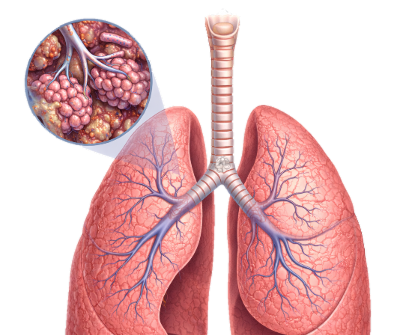
A serious, difficult to treat, and chronic lung infection with a high mortality rate and no FDA approved treatments
Current standard of care involves multi-drug regimens (inhaled and/or IV) given for ≥12 months after culture conversion. Treatment success rates are <50%, and there is significant toxicity risk from prolonged antibiotic exposure.
Epetraborole (EBO) has a novel mechanism of action in that it inhibits leucyl-tRNA synthetase (LeuRS; leucyl tRNA synthetase is an essential enzyme in protein synthesis). This mechanism avoids existing resistance pathways seen with current therapies.
A randomized, controlled investigator-initiated Phase 2 study in 84 patients was initiated in January 2026, with enrollment underway and topline data expected in late 2027. This study has the potential to establish proof-of-concept and support NDA-enabling studies, if positive.
Preclinical highlights
Potent in vitro activity against M. abscessus clinical isolates, including macrolide-resistant strains.
Favorable pharmacokinetic properties supporting oral dosing.
Low drug-to-drug interaction potential favorable for multi-drug therapy essential for M. abscessus therapy.
Bactericidal activity in preclinical pulmonary infection models.

